
Covering Three Mainstream Planting Scenarios with Targeted Solutions
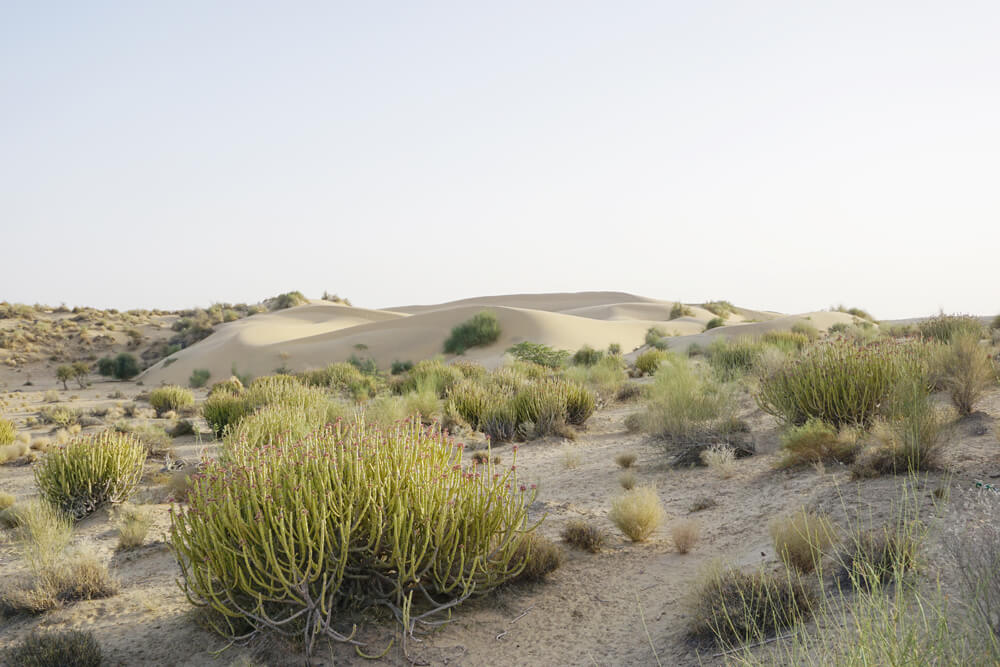
Drought Control and Desertification Prevention
Water-saving, drought-resistant, and significantly improving seedling survival rates
In desertified regions, the transplantation of poplar, sea buckthorn, and other seedlings is often challenged by water scarcity and root burial caused by wind-blown sand. PLA Coated Paper Tubes are designed to address these issues through water retention, drought resistance, and root protection:
Significantly increase seedling survival rates;
Retain moisture and reduce rapid soil water loss, lowering irrigation frequency and costs;
Fully biodegradable in natural environments, leaving no soil pollution and suitable for large-scale desertification control projects
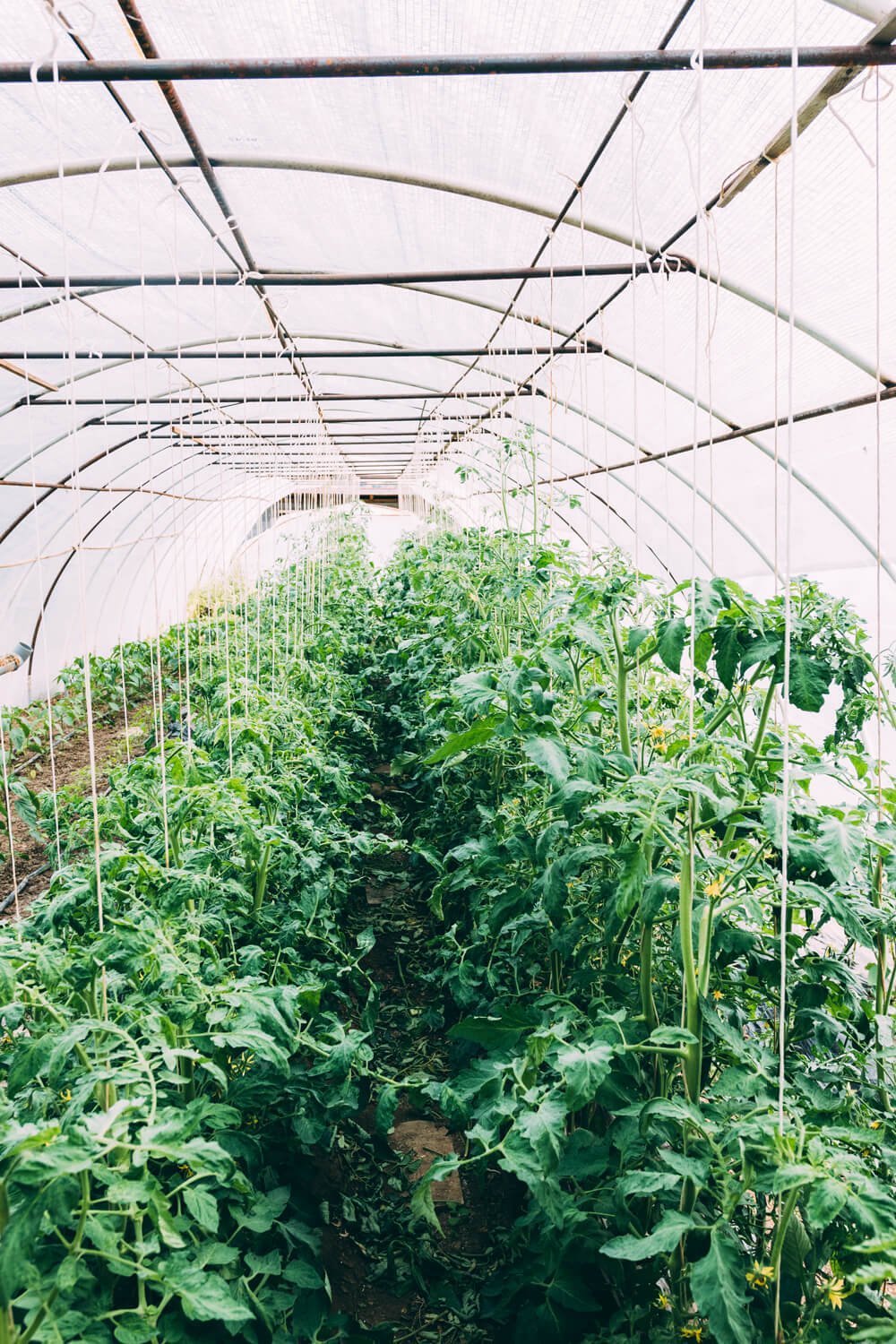
Orchard and Nursery Seedling Cultivation
Pest protection and root safety, doubling transplant efficiency
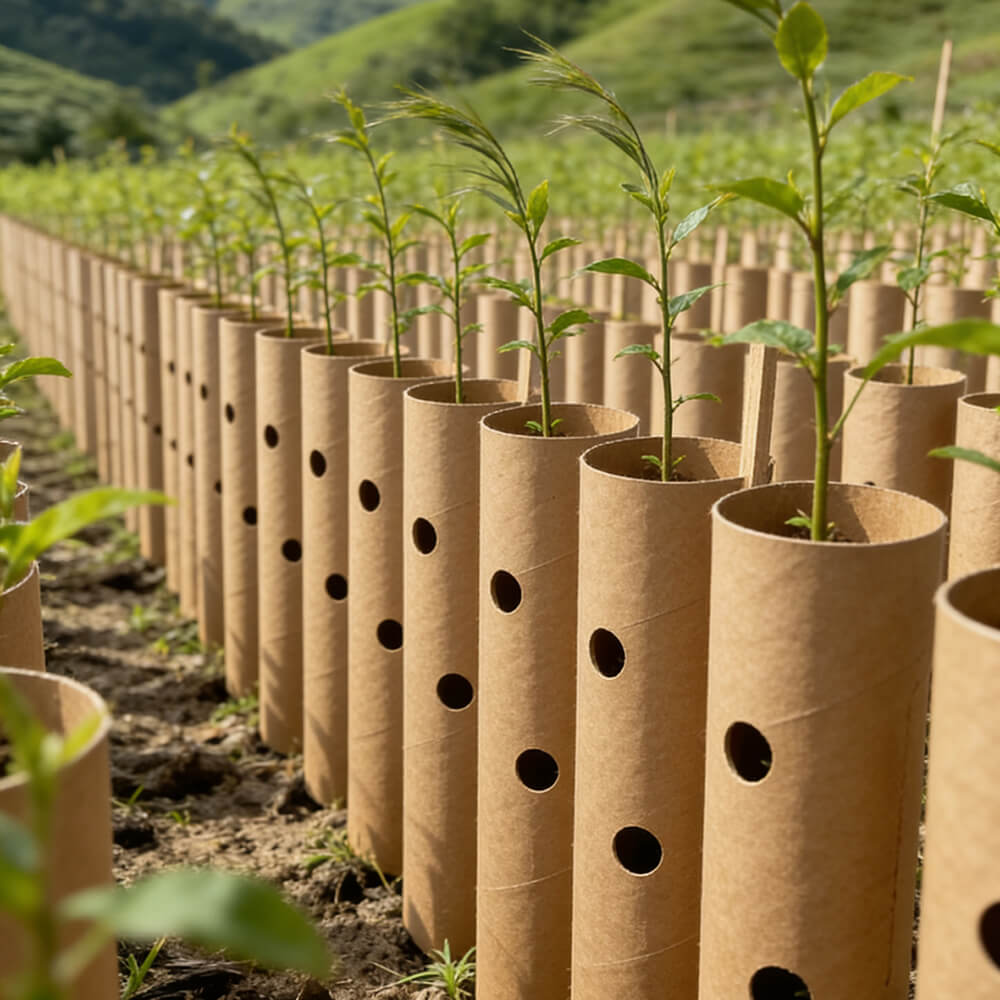
For high-value fruit and vegetable seedlings such as citrus and lychee, as well as hillside orchard planting, PLA Coated Paper Tubes effectively solve problems including pest infestation, soil compaction, and root damage:
-
Protect seedlings and reduce pest damage, defending against termites, cutworms, and other soil-borne insects;
-
No need to remove the tube during transplanting—seedlings can be planted directly with the tube, minimizing root disturbance and improving transplant efficiency;
-
The combination of PLA coating and kraft paper offers resistance to rain erosion in mountainous areas while remaining naturally biodegradable, making it suitable for large-scale deployment.
Urban Greening and Landscaping Transplantation
Durable, weather-resistant, and visually unobtrusive
Urban tree transplantation (such as Chinese scholar tree and ginkgo) often faces challenges including pedestrian trampling, vehicle impact, prolonged rain exposure, and intense sunlight. PLA Coated Paper Tubes provide a more reliable and sustainable solution:
-
Reduce post-transplant damage and effectively protect seedling growth;
-
PLA-coated surfaces resist rain soaking and UV exposure, reducing maintenance requirements;
-
After seedlings are established, the tubes naturally degrade without affecting landscape aesthetics, ideal for high-density urban planting projects.
International Application Case Studies
This green planting solution based on PLA Coated Paper Tubes has gained strong recognition not only in China but also in international markets such as the United States and Europe.
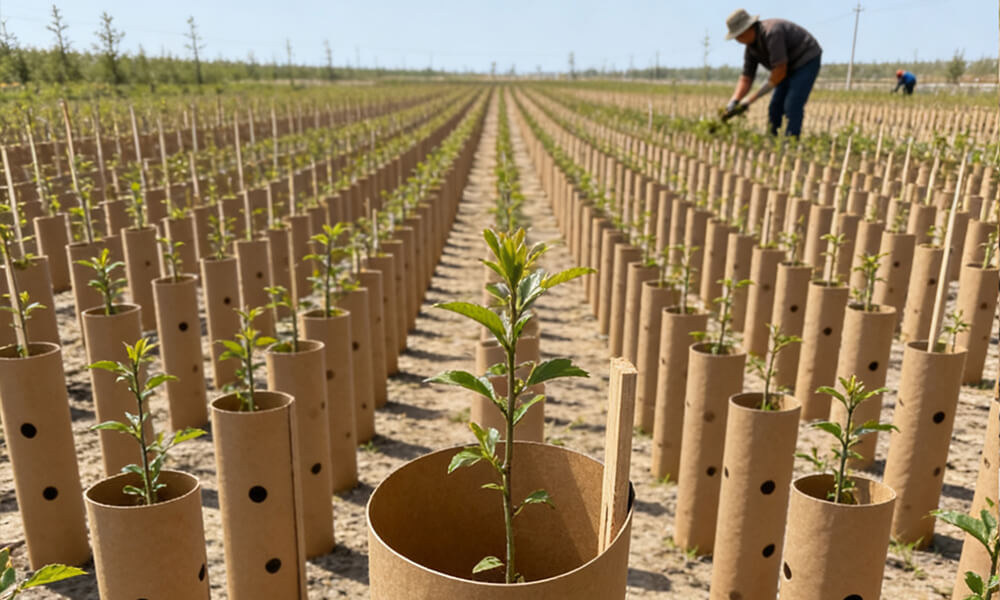
Orchard Seedling Protection in the United States
In California, PLA Coated Paper Tubes are used for transplanting apple and cherry seedlings. They provide effective protection against sunburn, frost, aphids, spider mites, and other crawling pests, significantly reducing seedling damage rates.
The tubes are breathable, do not suffocate roots, can be reused 2–3 times, and naturally degrade after disposal, meeting organic farming standards.
Nursery and Vegetable Seedling Cultivation in Europe
In Germany and France, these tubes are widely used for transplanting vegetable seedlings such as tomatoes and lettuce, as well as landscaping trees. They emphasize environmental sustainability and comply with organic agriculture certification requirements.
Under home composting conditions, the tubes can degrade within three months with no plastic residue, greatly improving seedling survival rates. They are extensively used in both home gardening and commercial nurseries and align well with EU environmental planting policies.
Core Applications and Technical Highlights
-
Material Adaptation: Use 160–300 g/m² base paper with 20–30 g/m² PLA coating. In arid environments, add a degradable film cover to enhance water retention; in humid environments, use double-sided PLA coating for corrosion resistance.
-
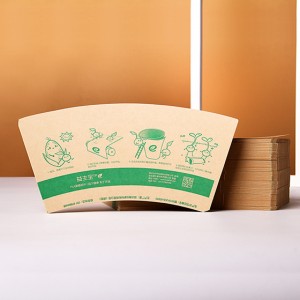
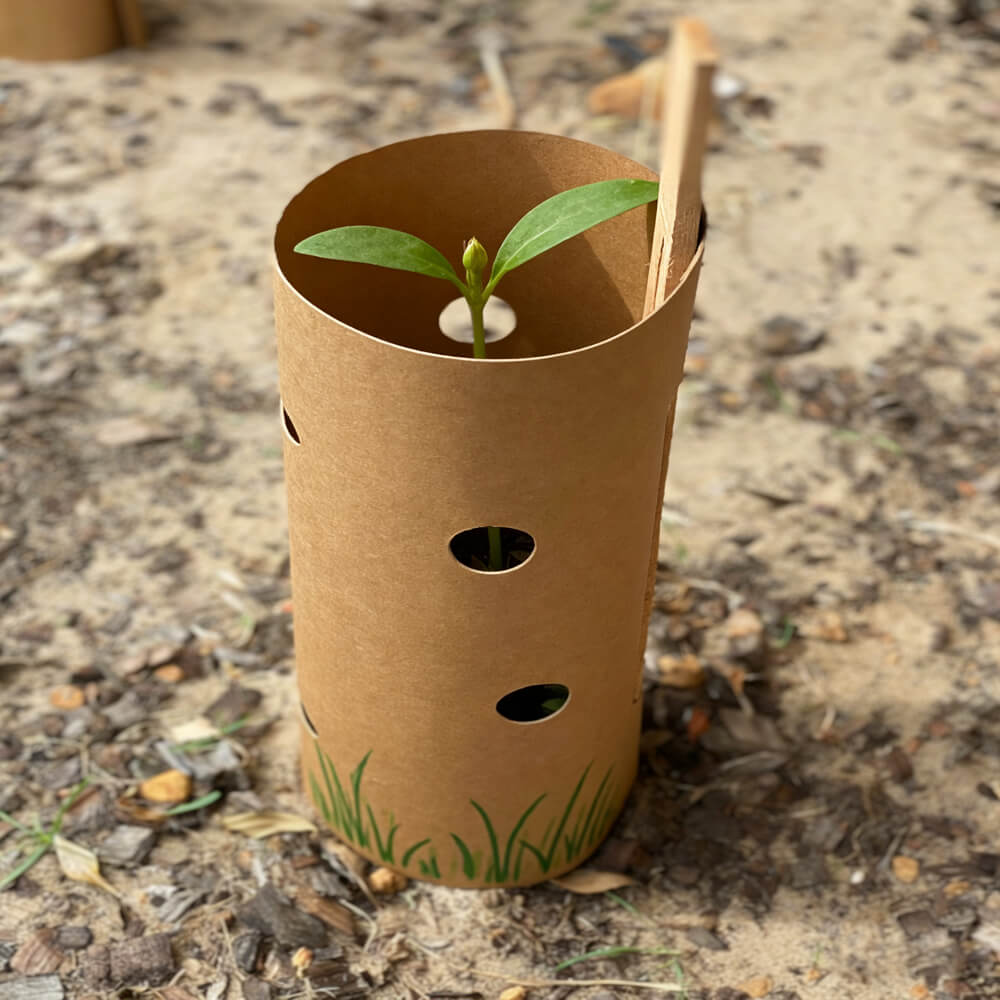
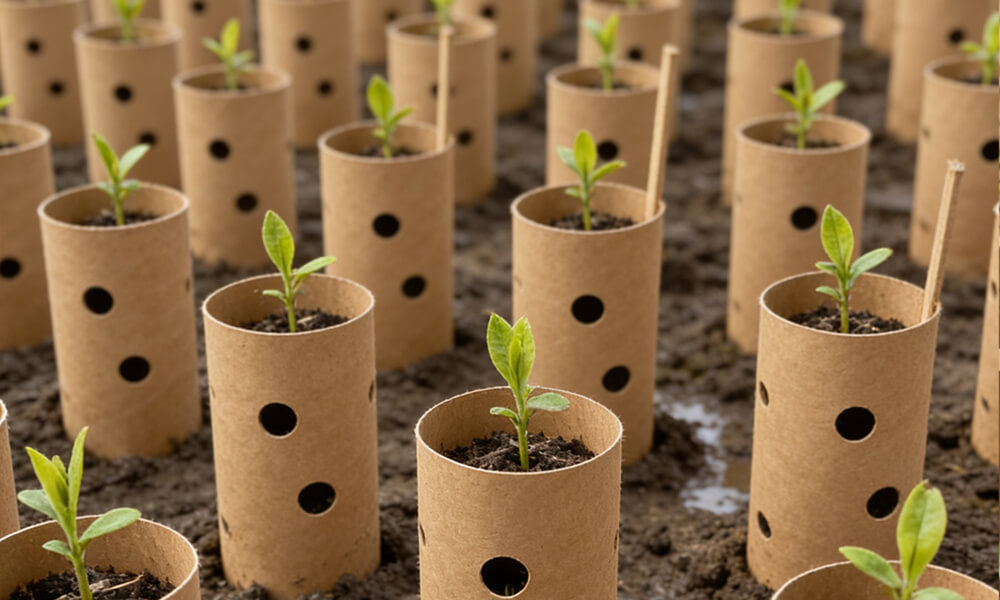
Structural Design: Include ventilation holes in the tube body and leave the bottom open to allow root growth. Tube height should cover 20–30 cm above the seedling roots to protect against sand burial and pests. Tubes can also be printed with text or patterns.
-
Cost and Efficiency: Each paper tube costs approximately 50% less than plastic protection tubes, requires no recycling, reduces labor costs, and is suitable for large-scale transplanting operations.
| Parameter Category | Key Indicators | Typical Range | Transplanting Adaptation Requirements |
| Base Paper Specifications | Kraft, Bagasse Paper | 160–340 g/m² | Must meet moisture and strength requirements to avoid deformation or collapse after filling with soil, watering, or exposure to wind and rain. |
| Coating Thickness | Single-sided / Double-sided | 20–30 g/m² | Too thin may leak water and soil; too thick may hinder root penetration. 20 g/m² is the recommended thickness for transplanting. |
| Paper Tube Dimensions | Diameter × Height | Diameter: 8–15 cm; Height: 15–30 cm (can be customized) | Small seedlings (vegetables, flowers): 8×15 cm; Medium seedlings (fruit trees, timber trees): 12×25 cm; Large seedlings: 15×30 cm. |
| Structural Design | Ventilation Holes / Bottom Closure | 3–5 ventilation holes (2–3 cm) in the middle to lower section; open bottom | Ventilation holes prevent root suffocation and rot, reduce water evaporation. Open bottom allows roots to grow downward, suitable for various climates including arid and humid regions. |
| Degradation Period | Natural Degradation Time | 6–24 months | PLA coating degrades within 6–24 months, converting into organic nutrients and improving soil quality. |
Environmental & Biodegradable
Made from plant-based materials and fully returns to nature.
No residue, no soil pollution, aligning with sustainable agricultural practices.
Seedling Protection & Growth
Retains water and nutrients within the microenvironment of the tube, promoting seedling establishment and growth.
Protects seedlings from pests, diseases, trampling, and mechanical damage.
Practical & Customizable
Low cost, easy to install and maintain, no recycling required.
Supports enhanced survival rates of seedlings.
Can be produced in multiple colors and printed designs, adding cultural and visual elements to the planting environment.
- Previous: Kraft Pizza Box
- Next: